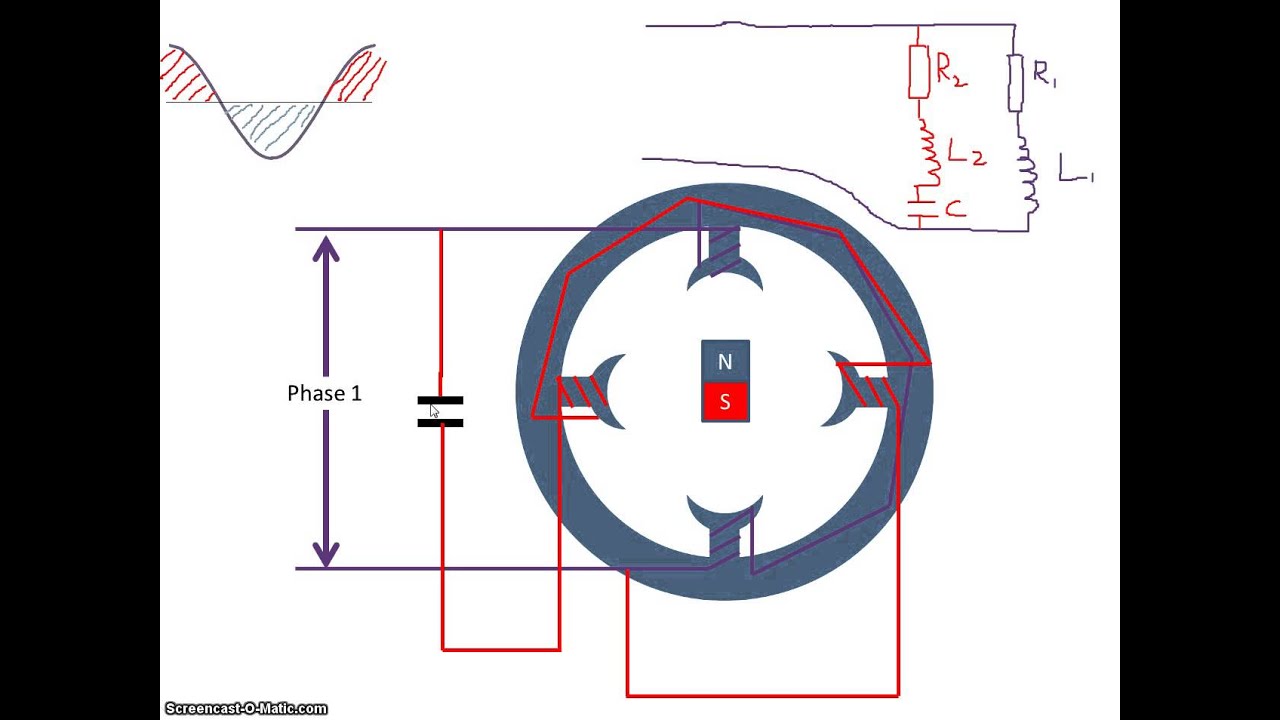
The torque production in switched reluctance motor comes from the tendency of the rotor poles to align with the excited stator poles. The rotor has neither windings nor permanent magnets. The stator poles have concentrated winding rather than sinusoidal winding.
The origin of the reluctance motor can be traced back . Switched reluctance motors (SRMs) have recently been gaining attention as contenders in the drives industry.

The recent advances in power electronics technology have made SRMs an attractive candidate for electric vehicle (EV) applications.
Unlike common DC motor types, power is delivered to windings in the stator (case) rather than the rotor.
The SRM has the lowest construction cost of any industrial electric motor because of its simple structure. Common uses for an SRM include applications where the rotor must be . This is an experimental switched reluctance motor which uses only external electromagnets in the stator, and no windings or permanent magnets in the rotor.